
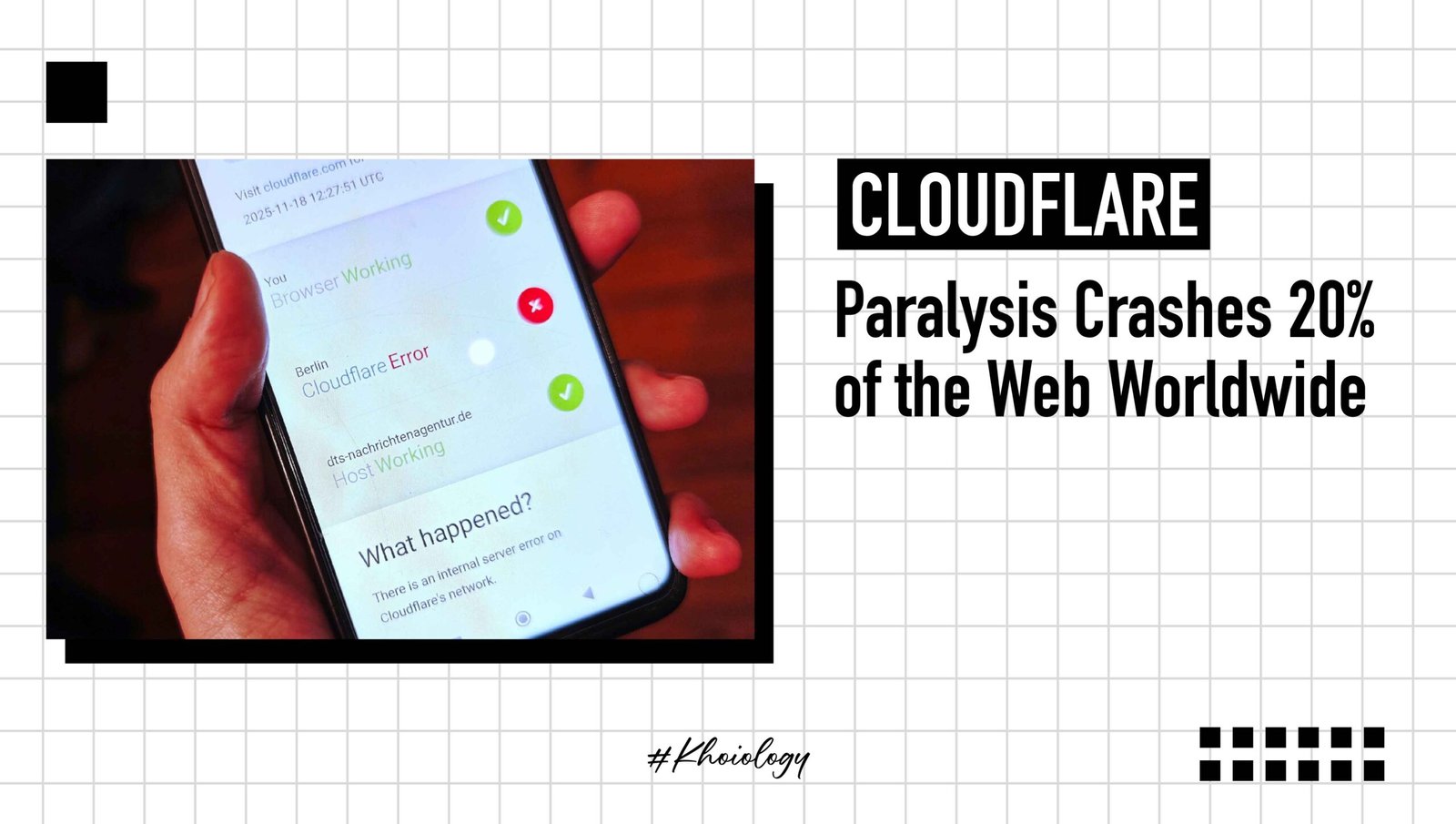
If you felt like “half the internet disappeared” yesterday, you weren’t imagining things. On November 18, 2025, a massive technical failure at Cloudflare down caused a global outage, taking down approximately 20% of internet services.
For digital marketers, developers, and everyday users, this was a stark reminder of how fragile our centralized digital infrastructure really is. Here is the Khoiology breakdown of what happened, why it happened, and the critical lessons for businesses in Vietnam and beyond.
1. The Incident: What Happened?
The chaos began around 11:20 UTC (18:20 Vietnam Time). Users worldwide were greeted with widespread Error 500 messages as servers failed to respond.
Cloudflare moved quickly to investigate and confirmed a crucial fact: This was not a cyberattack.
The Root Cause: A “Bloated” Config File The culprit was identified as an internal technical error. An automated configuration file—designed to manage security threats like bot protection and DDoS attacks—unexpectedly “bloated” in size. This file grew larger than the system was programmed to handle, crashing Cloudflare’s traffic management software and causing a system-wide overload.
As Dane Knecht, Cloudflare’s CTO, stated on X:
“This is an unacceptable incident. We are prioritizing restoring customer traffic first, then the Dashboard. We are deeply sorry for the disruption.”
2. The Domino Effect: Global & Local Impact
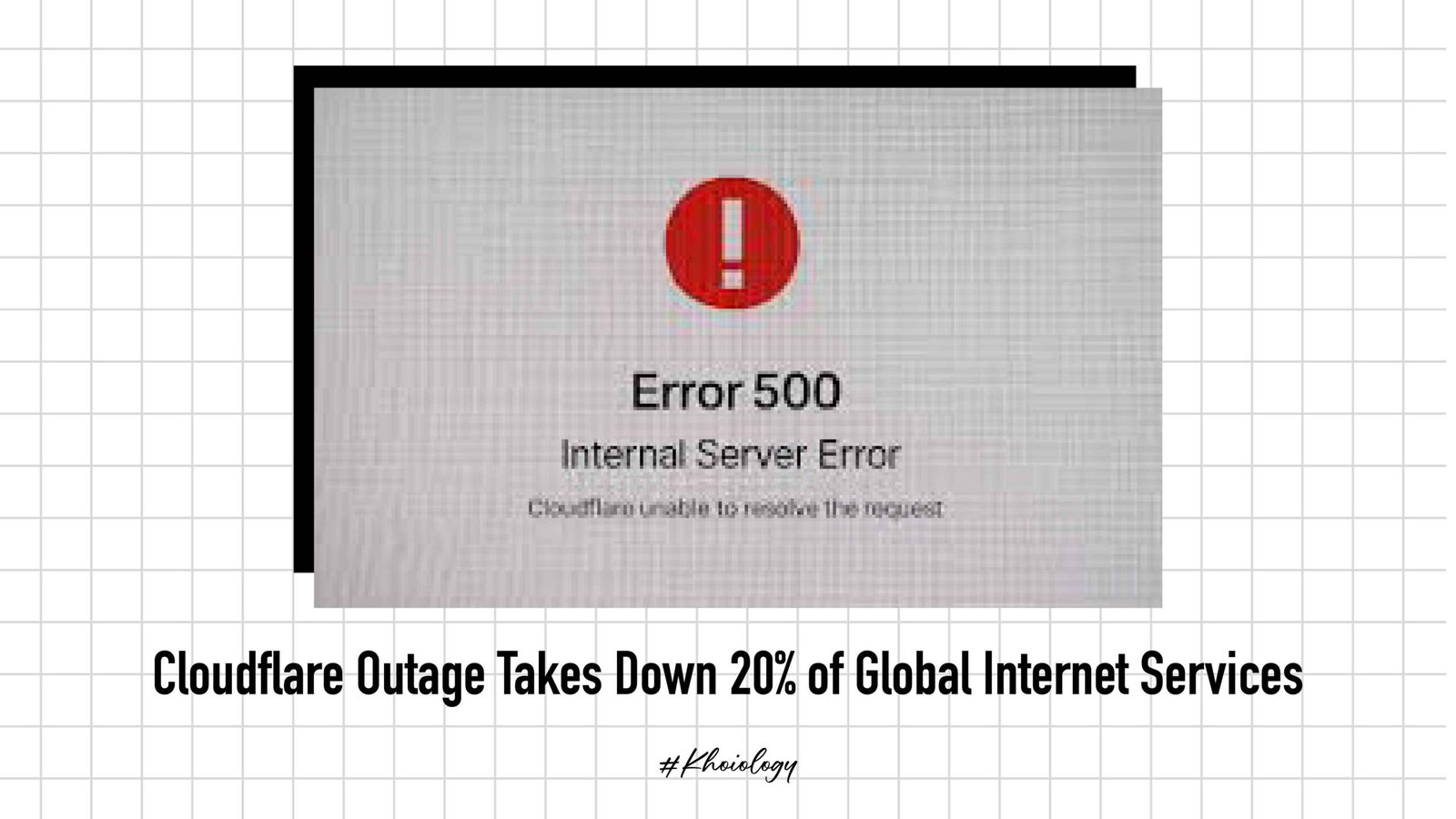
Because Cloudflare acts as a backbone for a vast portion of the web, the failure triggered a severe “domino effect”. The outage lasted several hours, spiking thousands of reports on Downdetector.
Global Casualties:
- Tech Giants: X (Twitter) and ChatGPT faced content loading errors and login failures.
- Creativity & Media: Spotify playlists wouldn’t play, and Canva design tools became inaccessible.
- Critical Infrastructure: It wasn’t just websites; Australian airports (Qantas, Virgin) saw their check-in systems paralyzed, and government portals in Canada and Europe went offline.
The Impact in Vietnam The timing couldn’t have been worse for Vietnam. Hitting at 18:20 (UTC+7), the outage coincided with peak hours for both work and evening entertainment.
- Work & Productivity: Professionals and students relying on Canva and ChatGPT found their workflows halted.
- Entertainment: Gamers experienced high ping or login errors, while Spotify users were cut off from their music.
- E-commerce: Various local e-commerce sites and travel services dependent on Cloudflare for speed and security were disrupted.
3. The “Khoiology” Takeaway: The Danger of Centralization
While Cloudflare’s stock (NET) took a slight hit, the real damage was to the perception of internet stability. This event highlighted a critical vulnerability in the modern web: Over-dependence.
Jim Londoncentric, a cybersecurity expert, summed it up perfectly:
“Cloudflare down means DownDetector is also down – that is the definition of excessive dependence. We are putting too many eggs in one basket.”
The Lesson for Businesses David Choffnes, a Computer Science Professor at Northeastern University, warns that the web is “more brittle than ever” and that reliance on a single provider (whether AWS, Azure, or Cloudflare) is no longer safe.
For Vietnamese enterprises, this is a wake-up call. While Cloudflare is excellent for CDN speed and DDoS protection, relying on it as a single point of failure is risky.
Actionable Advice:
- Diversify Infrastructure: Businesses must stop relying on a single provider.
- Implement Multi-CDN: Use multiple Content Delivery Networks to ensure that if one goes down, another picks up the traffic.
- Prepare Failovers: Establish on-premise backup solutions or alternative regional providers to ensure business continuity.
Final Thoughts
The outage of November 18, 2025, proved that even the giants can fall. As we build our digital presence, resilience must be prioritized just as highly as speed. Don’t let a single “bloated file” halfway across the world shut down your business.
